How to buy a diamond ring.
Everything you need to know.
Buying a diamond ring is one of the larger discretionary purchases most people make — and also one of the most opaque. The industry has historically made it difficult to comparison-shop, understand what you're actually paying for, or know when you're getting good value. This guide covers everything you need: how diamonds are graded, what the 4Cs actually mean in practice, how to think about settings and metals, how to set a realistic budget, and what to watch for when choosing where to buy.
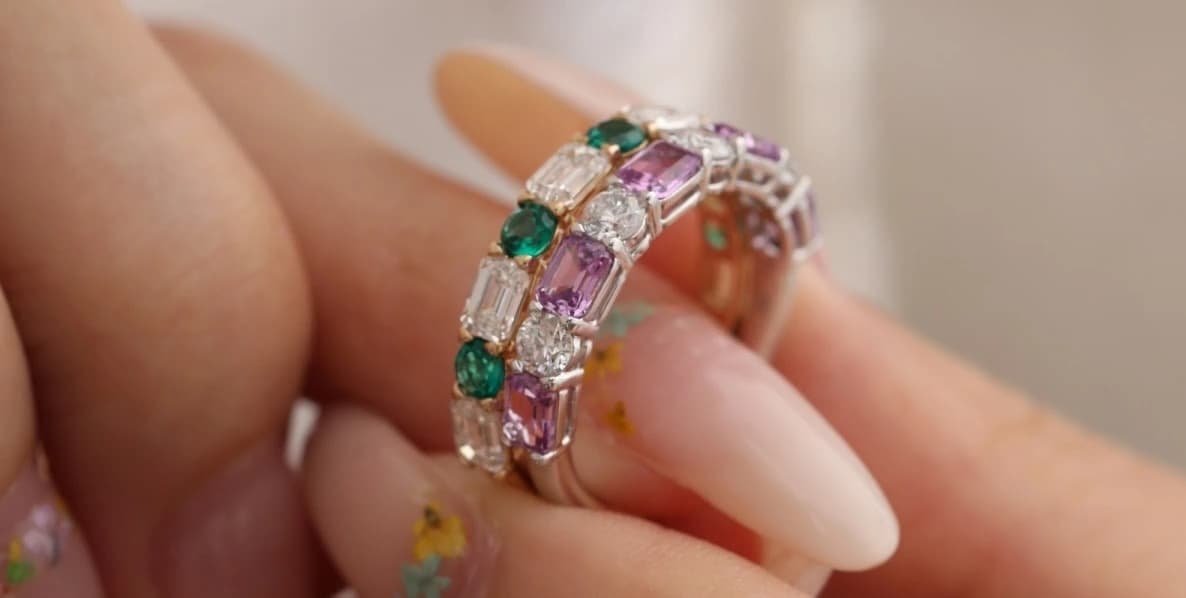
Cut, Colour, Clarity, Carat — and which matters most.
The 4Cs are the universal framework for diamond grading, established by the GIA. Understanding them prevents you from paying for characteristics you can't see and helps you allocate budget to what actually affects how a diamond looks. Cut is the most important C and the one most worth spending on. Cut refers not to the shape of the diamond (round, oval, emerald) but to how well it has been faceted — the proportions, symmetry, and polish that determine how much light the stone returns to your eye. A well-cut G/VS2 diamond will look more brilliant than a poorly cut D/VVS1. GIA grades cut as Excellent, Very Good, Good, Fair, and Poor. Always buy Excellent or Very Good. Colour grades run from D (colourless) to Z (visibly yellow). In practice, the difference between D, E, and F is invisible to the naked eye in most settings. G and H are 'near colourless' and represent excellent value — the savings over D are significant and the visual difference is imperceptible once set in metal. Clarity measures internal inclusions and surface blemishes on a scale from FL (flawless) to I3 (obvious inclusions). For most buyers, VS2 or SI1 represents the sweet spot — inclusions are present but not visible to the naked eye, and the savings over VVS grades are substantial. Carat is the weight of the stone (1ct = 0.2g). It is the strongest driver of price, but the relationship is non-linear: there are large price jumps at 0.5ct, 1ct, and 2ct because of buyer psychology around round numbers. A 0.95ct stone will look virtually identical to a 1ct stone and cost significantly less.
Shape is style. It doesn't affect quality.
Diamond shape (sometimes called cut by non-specialists) refers to the outline of the stone — round brilliant, oval, cushion, princess, emerald, pear, marquise, and so on. Shape is a stylistic preference, not a quality criterion. That said, shape affects price per carat: round brilliants command a premium because the cutting process wastes more rough stone than fancy shapes. An oval or cushion of the same carat weight as a round brilliant will typically cost 20–30% less. Emerald cuts are known for their hall-of-mirrors effect — long parallel facets that create flashes of light rather than the sparkle of a brilliant cut. They tend to show colour and clarity more than brilliant cuts, so buyers typically buy slightly higher grades for emerald cuts to achieve the same visual appearance.
The setting is as important as the stone.
A diamond's setting determines how it looks when worn — and how it holds up over time. The most common setting types are prong (the stone is held by four or six metal claws, maximising light exposure), bezel (the stone is encircled by a rim of metal, more protective for active wearers), pavé (smaller stones set closely along the band), and halo (a ring of smaller stones around the centre stone, which makes the centre appear larger). For metals, the main options are platinum, white gold, yellow gold, and rose gold. Platinum is the most durable and hypoallergenic but the most expensive. White gold is rhodium-plated yellow gold — it requires replating every few years but costs less than platinum. Yellow and rose gold are alloyed with other metals for strength; 18ct (75% gold) is the standard for fine jewellery, offering a good balance of colour richness and durability. The choice of metal affects both the aesthetics and the long-term maintenance of the piece.
Ignore the 'two months salary' rule.
The idea that an engagement ring should cost two months of the buyer's salary was invented by De Beers in a 1980s advertising campaign and has no basis in logic, tradition, or necessity. Spend what makes sense for your financial situation and what reflects the quality of piece you want. The useful reframe is to think in terms of the stone grade you're targeting and the setting you want, price those independently, and work backwards to a budget. A D/VVS1 excellent-cut 1ct round brilliant in a platinum solitaire setting will cost substantially more than a G/VS2 excellent-cut 0.8ct oval in an 18ct gold setting — but the second ring will look exceptional and cost a fraction of the first. Lab grown diamonds offer a further reset: the same 4C grade in a lab grown stone costs 60–80% less than mined, which means you can either spend the same and get a significantly larger or higher-grade stone, or spend less and get equivalent quality.
What to look for — and what to avoid.
The most important things to verify before buying from any seller: whether stones come with independent grading certificates (GIA or IGI — not in-house grading), whether return and resizing policies are clearly stated, and whether there is a clear description of metal type and purity. High-street jewellers carry the highest margins and the most sales pressure, but the lowest price transparency. Online marketplaces vary widely. The most significant recent shift is the emergence of direct-to-manufacturer models — platforms that bypass the retail layer entirely, which is where the most meaningful price differences now exist. At Quorum, we go one step further with group buying: by aggregating orders, we negotiate wholesale-tier pricing that is unavailable even to most online retailers.
What is the most important of the 4Cs?
Cut. It has the greatest impact on how beautiful and brilliant the stone looks. Prioritise an Excellent or Very Good cut grade before considering the other three.
What diamond cut is most popular for engagement rings?
Round brilliant is the most popular globally, followed by oval (which has grown significantly in recent years), cushion, and princess. Emerald and pear cuts are less common but distinctive.
Is it better to buy a diamond ring in store or online?
Online typically offers better price transparency and lower margins. The key is buying from sellers that provide independent grading certificates (GIA or IGI) — this removes the information asymmetry that makes in-store buying risky.
What is the best metal for a diamond ring?
Platinum is the most durable and requires the least maintenance, but commands a premium. 18ct white or yellow gold is excellent for most buyers — durable, looks great, and more affordable.
Should I buy a mined or lab grown diamond?
Lab grown diamonds are chemically and visually identical to mined, cost 60–80% less for the same grade, and have full supply chain traceability. For most buyers, lab grown is the rational choice unless resale speculation is a priority.