Ethical jewellery isn't a marketing term.
Here's what it actually requires.
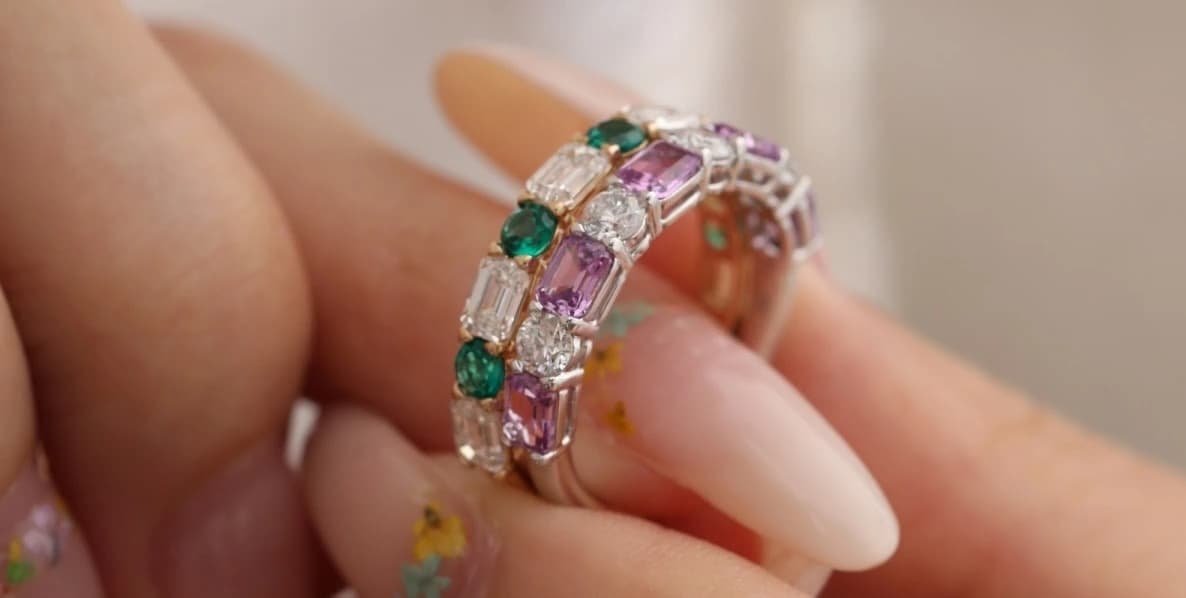
The word 'ethical' appears frequently in jewellery marketing. It is used to describe everything from Fairtrade certifications to recycled metals to vague commitments to responsible sourcing. At Quorum, we use it in a specific and verifiable sense: every stone we use is lab grown, IGI-certified, and fully traceable to its origin. No mining. No complex supply chains. No ambiguity about where the stone came from.
The ethical case against mined diamonds is structural, not exceptional.
When most people think of 'conflict diamonds,' they think of specific documented cases — Sierra Leone in the 1990s, or the events depicted in the film Blood Diamond. The Kimberley Process, established in 2003, was designed to exclude conflict diamonds (those funding armed rebel movements) from the legitimate supply chain. But critics of the KP — including some of its founding members — argue that its definition is too narrow, its enforcement inconsistent, and its scope insufficient to address broader human rights concerns in artisanal mining. Beyond conflict, the structural issues with mined diamond supply chains include labour conditions in artisanal mines, environmental disruption, community displacement, and the inherent opacity of a supply chain that passes through multiple countries and intermediaries before reaching a retailer. These are not aberrations — they are structural features of large-scale diamond mining.
Full traceability from creation to setting.
Lab grown diamonds are produced in certified facilities using either HPHT or CVD processes. The origin of every stone is documentable: which facility, which process, which batch. That traceability exists from the moment the diamond is created — there is no opaque supply chain, no passage through intermediary countries with weaker oversight, no artisanal mining context. For buyers who want certainty about what they are wearing and where it came from, lab grown diamonds offer something the mined supply chain fundamentally cannot: a clean and complete chain of custody.
Significantly lower carbon footprint per carat.
Diamond mining is land-intensive and energy-intensive. Open-pit mines — the dominant method for gem-quality diamond extraction — can displace hundreds of millions of tonnes of earth per year across global operations. The carbon footprint per polished carat for mined diamonds is estimated at approximately 57kg of CO2 equivalent by some analyses, compared to approximately 0.028kg per carat for CVD lab grown diamonds produced using renewable energy. Even using grid-average energy, CVD lab grown diamond production is substantially lower impact than mining on a per-carat basis. The ecological disruption from mining — habitat destruction, water use, acid drainage — has no equivalent in lab grown production.
Lab grown stones. Direct supply. No shortcuts.
Quorum's decision to use only lab grown diamonds is not a positioning exercise — it is a sourcing decision that makes every piece we sell categorically different from mined diamond jewellery in its ethical profile. We work with established manufacturers who produce and certify lab grown diamonds to IGI standards. We do not use simulants, we do not blend mined and lab grown stones, and we do not sell recycled mined diamonds as an ethical alternative (though recycled mined stones are better than new mined stones, they do not offer the same traceability benefits as lab grown). Every stone that leaves Quorum carries an IGI grading certificate that confirms its grade — and because it is lab grown, its origin is verifiable by nature.
You shouldn't have to pay more to buy ethically.
A persistent frustration for ethically-minded consumers is that 'ethical' products so often come with a price premium. Fairtrade gold, recycled metals, responsibly sourced mined diamonds — these frequently cost more than their conventional alternatives, pricing ethical choice out of reach for many buyers. Lab grown diamonds invert this pattern: they are both the more ethical option and the more affordable one. At Quorum, group buying compounds the affordability further — so the most ethical choice is also the best value. There is no trade-off between doing right and getting a good deal.
Are Quorum's diamonds certified?
Yes. All lab grown diamonds sold through Quorum carry IGI grading certificates documenting Cut, Colour, Clarity, and Carat weight. IGI is one of the world's leading independent gemological grading bodies.
Is lab grown always more ethical than mined?
For traceability and environmental impact, yes — categorically. The specific ethical footprint of a lab grown diamond depends on the energy source used in production, with renewable-powered CVD being the most favourable profile. All things being equal, lab grown diamonds offer a verifiably better ethical profile than mined diamonds.
What about recycled or vintage mined diamonds?
Recycled mined diamonds do not add new demand to mining operations, which is a positive. However, they don't offer the same supply chain transparency as lab grown stones — provenance is often unknown — and they still carry the original environmental cost of their extraction. Lab grown is a cleaner choice from a traceability standpoint.
Does Quorum use recycled metals?
We are working to confirm recycled metal use across our manufacturer network. Check our current material specifications on active drop listings, or contact us for details on specific pieces.
How do I know the ethical claims are real and not marketing?
The claim that a diamond is lab grown is verifiable — it is documented in the IGI certificate and can be confirmed by a gemologist. Unlike claims about responsible mining (which rely on often-fragile audit chains), the lab grown origin of a stone is an objective, testable fact.